

Fasting During Pregnancy on Karwa Chauth: Safety Tips and Precautions
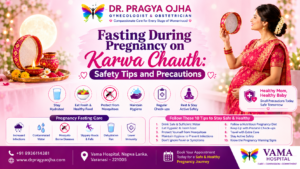
Karwa Chauth is one of the most emotional days of the year for married women in North India. The sargi before sunrise, the evening puja, the wait for the moon. For many women, missing this vrat even once feels unthinkable. But when you are pregnant, a very real question comes up: is fasting during pregnancy safe for me and my baby?
Every year, around this festival, our OPD at Vama Hospital receives the same worried calls. “Doctor, kya main is baar vrat rakh sakti hoon?” “Can I fast without water for just one day?” These are fair questions, and there is no single answer that fits every woman.
In this guide, Dr. Pragya Ojha, gynecologist and obstetrician at Vama Hospital, Varanasi, explains what happens to your body when you fast while pregnant, who should avoid it, safer ways to observe the vrat, and the warning signs that mean you should break your fast immediately.
What Happens to Your Body When You Fast While Pregnant?
Pregnancy changes how your body uses energy. Your baby depends on a steady supply of glucose, fluids and nutrients from you, all day and all night. When you go without food or water for 12 to 14 hours, your body has fewer reserves to fall back on than before pregnancy.
Blood Sugar Drops Faster
During pregnancy, blood sugar levels can fall more quickly between meals. This can cause dizziness, shakiness, sweating, headache and weakness. In women with gestational diabetes, the swings can be sharper and need closer monitoring.
Dehydration Sets In Sooner
A pregnant woman needs more fluid than usual to support increased blood volume and amniotic fluid. A full day without water can lead to dehydration, which may cause headaches, constipation, urinary infections and, in some cases, uterine tightening or contractions.
Why Nirjala Fasting Is the Bigger Concern
Most doctors are less worried about skipping a few meals and more concerned about fasting during pregnancy without water. Food can be partly managed by your body’s stored energy for a few hours. Water cannot. That is why a nirjala (waterless) Karwa Chauth vrat carries more risk than a phalahari or fruit-and-fluid fast.
Is Fasting Safe During Pregnancy? The Honest Answer
Is fasting safe during pregnancy? For some healthy women with a normal, uncomplicated pregnancy, a modified fast with fluids and light food may be manageable after a doctor’s check. For others, any form of fasting during pregnancy can be risky.
The decision depends on:
- Your trimester
- Whether your pregnancy is normal or high-risk
- Your blood sugar, blood pressure and haemoglobin levels
- Your baby’s growth on recent scans
- How you have been feeling in the past few weeks
This is why a short consultation before the festival matters more than advice from relatives or the internet.
Fasting During Pregnancy by Trimester: What to Expect
First Trimester (Week 1 to 12)
Nausea, vomiting and low appetite are common in early pregnancy. Many women are already struggling to keep food and water down. Fasting during pregnancy in this phase can worsen weakness and dehydration. Most gynecologists advise avoiding a strict fast during these weeks.
Second Trimester (Week 13 to 26)
This is often the most comfortable phase. If your reports are normal and your doctor agrees, a modified fast with water, coconut water, milk and fruits may be considered.
Third Trimester (Week 27 to 40)
Your baby is growing fast and your fluid needs are high. Dehydration in late pregnancy may trigger false or early contractions. Strict fasting is generally not recommended in the third trimester.
Who Should Avoid Karwa Chauth Fasting During Pregnancy?
Karwa Chauth fasting during pregnancy is best avoided, or done only under direct medical guidance, if you have:
- Gestational diabetes or pre-existing diabetes
- High blood pressure or pre-eclampsia
- Anaemia (low haemoglobin)
- A history of miscarriage or preterm labour
- Twins or multiple pregnancy
- Low amniotic fluid or slow baby growth on scan
- Severe vomiting (hyperemesis gravidarum)
- Thyroid disorders or kidney problems
- A pregnancy already marked as high-risk
If any of these apply to you, read more about high-risk pregnancy care and speak to your doctor before planning any vrat.
Safer Ways for Pregnant Women Fasting on Karwa Chauth
Faith and health do not have to compete. Many pregnant women fasting on Karwa Chauth choose a gentler version of the vrat. Here are some options to discuss with your gynecologist.
Option 1: Phalahari Vrat
Eat fruits, dry fruits, milk, curd and sabudana-based foods through the day. Drink water regularly. You still observe the puja and moon rituals fully.
Option 2: Fluid-Based Vrat
Skip solid meals but keep sipping water, coconut water, nimbu pani, buttermilk and milk every one to two hours.
Option 3: Symbolic Vrat
Some families agree that the expecting mother does only the puja and katha while eating normally. Your devotion is in your intention, not in going without water.
Karwa Chauth Pregnancy Precautions: A Practical Day Plan
If your doctor has approved a modified fast, these Karwa Chauth pregnancy precautions can make fasting during pregnancy safer and more comfortable.
The Night Before
- Eat a balanced dinner with dal, roti, sabzi and curd
- Drink plenty of water
- Sleep early
Sargi (Before Sunrise)
A good sargi gives your body a strong start. Include:
- Milk or lassi
- Soaked almonds, walnuts and dates
- A banana or apple
- Paratha or poha for slow-release energy
- Two to three glasses of water
Avoid very salty, oily or sugary sweets, as they increase thirst and cause sugar spikes.
During the Day
- Rest as much as possible and avoid heavy household work
- Stay indoors in a cool, well-ventilated room
- Keep a water bottle and a few dates nearby, just in case
- Count your baby’s movements in the afternoon (third trimester)
- If you have diabetes, check your sugar as advised by your doctor
Breaking the Fast
After the moon puja, start slowly with water or coconut water, then fruits, then a light meal. Avoid fried food and heavy sweets immediately after a long gap, as they can cause acidity and a sudden sugar spike.
For more on eating well through pregnancy, you can download our free Trimester Diet Charts.
Warning Signs: When to Break Your Fast Immediately
No ritual is worth risking your health or your baby’s. Stop fasting during pregnancy right away, drink fluids and contact your doctor if you notice:
- Dizziness, fainting or blurred vision
- Severe headache
- Very dark urine or no urine for many hours
- Reduced or no baby movements
- Abdominal pain, cramps or regular tightening
- Vaginal bleeding or leaking fluid
- Rapid heartbeat, shaking or heavy sweating
- Persistent vomiting
These are not signs to “wait till moonrise.” They need attention now. You can also read our guide on women’s health symptoms you should never ignore.
Fasting During Pregnancy: Quick Safety Table
| Situation | Is Fasting Advisable? | Safer Alternative |
| Normal pregnancy, 2nd trimester, reports fine | May be possible after doctor’s approval | Phalahari or fluid-based vrat |
| 1st trimester with nausea or vomiting | Generally not advised | Symbolic vrat with normal meals |
| 3rd trimester | Strict fast not advised | Fluids and light food through the day |
| Gestational diabetes | Not advised without supervision | Meals as per diabetic plan |
| High BP, anaemia or high-risk pregnancy | Not advised | Puja only, eat normally |
| Fasting without water (nirjala) | Not recommended in pregnancy | Keep sipping water every 1–2 hours |
Common Questions and Important Considerations
“My mother-in-law kept the fast during her pregnancy. Why can’t I?”
Every pregnancy is different. Your health, your trimester and your reports decide what is safe for you. A calm conversation, with your doctor’s advice, often helps families understand.
“Will one day of fasting really harm my baby?”
For a healthy woman, one day of modified fasting during pregnancy, with fluids, is usually less concerning. The risk rises with nirjala fasting, existing health conditions, or late pregnancy. That is why medical advice before the day is important.
“Should I tell my doctor I’m planning to fast?”
Yes. A quick check of your blood pressure, sugar and haemoglobin a few days before the festival helps your doctor guide you on fasting during pregnancy properly.
Why Women in Varanasi Trust Vama Hospital for Pregnancy Care
At Vama Hospital in Nagwa Lanka, near BHU, pregnancy care goes beyond routine check-ups. We believe in listening first, explaining clearly and respecting each family’s traditions.
- Personalised antenatal care for every trimester
- Specialised monitoring for high-risk pregnancies
- In-house ultrasound, laboratory and pharmacy
- Guidance on diet, festivals, travel and daily routine during pregnancy
- Emergency maternity support
- Normal delivery and C-section care under one roof
About Dr. Pragya Ojha
Dr. Pragya Ojha (MBBS, DNB OBG, MIMA, MFOGSI) is the Director of Vama Hospital, Varanasi. With over 15 years of experience in gynecology, obstetrics, infertility and laparoscopic surgery, she has guided thousands of women through safe pregnancies. Her approach combines evidence-based medicine with patience and emotional support, so every mother feels heard. Learn more about Dr. Pragya Ojha.
Our Pregnancy Care Services
- Preconceptional counselling and pregnancy care
- High-risk pregnancy management
- Antenatal check-ups and scans
- Gestational diabetes and BP monitoring
- Nutrition and lifestyle counselling
- Normal delivery and C-section
- Recurrent miscarriage evaluation and support
Emergency Maternity Care
If you experience bleeding, severe pain, fainting or reduced baby movements during your fast, do not wait. Call +91 9936114381 immediately or reach the nearest hospital. Timely care makes a real difference.
Our Commitment to Trustworthy Care (EEAT)
This guide on fasting during pregnancy has been prepared under the guidance of Dr. Pragya Ojha, based on her clinical experience with expecting mothers in Varanasi and on recommendations from trusted bodies such as the World Health Organization, FOGSI and the NHS. It is meant for awareness only and does not replace a personal consultation. Every pregnancy is unique, and your doctor’s advice should guide your decision.
Frequently Asked Questions
Is fasting during pregnancy safe on Karwa Chauth?
It depends on your health and trimester. Some women with a normal pregnancy may manage a modified fast with fluids after their doctor’s approval. Strict nirjala fasting is generally not recommended.
Can I do Karwa Chauth fasting during pregnancy without water?
Fasting during pregnancy without water is not recommended. It can lead to dehydration, low blood sugar and, in some cases, contractions. Keep sipping fluids through the day.
Which trimester is safest for a modified fast?
The second trimester is usually the most stable. Even then, fasting during pregnancy should only be considered after a check-up.
What should I eat in sargi when pregnant?
Milk, soaked dry fruits, dates, a banana, and a light paratha or poha, along with plenty of water. Avoid salty, oily and very sweet foods.
Can a diabetic pregnant woman keep the Karwa Chauth vrat?
Women with gestational or pre-existing diabetes should not fast without close medical supervision, as blood sugar can fall or rise dangerously.
What are the signs that I should break my fast?
Dizziness, fainting, severe headache, reduced baby movements, abdominal pain, bleeding or very dark urine. Drink fluids and contact your doctor immediately.
Is it okay to observe only the puja and not fast?
Yes. Many families accept a symbolic vrat during pregnancy. The spirit of Karwa Chauth lies in love and prayer, not in risking your health.
How do I break the fast safely?
Start with water or coconut water, then fruits, then a light home-cooked meal. Avoid heavy fried food and sweets immediately.
Can fasting cause miscarriage?
A single day of modified fasting during pregnancy, in a healthy woman, is unlikely to cause miscarriage. However, severe dehydration and existing risk factors can create complications, which is why medical advice is important.
Should I consult a gynecologist before Karwa Chauth?
Yes. A simple check of BP, sugar, haemoglobin and baby’s growth a few days before the festival helps you decide safely.
Conclusion
Karwa Chauth is about love, faith and togetherness, and pregnancy is one of the most precious phases of that journey. Fasting during pregnancy is not a one-size-fits-all decision. For some women, a gentle, fluid-based vrat may be possible with medical approval. For others, a symbolic vrat is the safest and kindest choice for both mother and baby. Listen to your body, stay hydrated, and let your doctor’s advice guide you.
Book Your Pre-Festival Pregnancy Check-Up
Planning to observe Karwa Chauth this year? Get a quick pregnancy check-up with Dr. Pragya Ojha before the festival.
Vama Hospital
N1/59, A-31 Shivpuri Colony, Nagwa Lanka, Opposite Vinayak Residency, Near Gayatri Shaktipeeth, Varanasi – 221005
Call / WhatsApp: +91 9936114381
OPD Timings: Monday to Thursday, 9:00 AM – 4:00 PM | Friday to Saturday, 9:00 AM – 3:00 PM | Sunday closed
Follow Dr. Pragya Ojha for more pregnancy and women’s health tips:

